
📷 Mt. Washington
North America
Mt. Washington
Projected to open December 11, 2026
Best months to book: January, March, February · last season + 30-yr record
Scroll for happiness
Projected to open Dec 11 — closed April 4
Weather data is still collected for informational purposes.
Last Snowfall
--
Past 24 Hours
0cm
Past 48 Hours
0cm
Past 10 Days
0cm
7-Day Forecast
1cm
Snow Depth
--
Mt. Washington is projected to open December 11, 2026. Here is when it is usually best to book.
Best months to book
- #1January123cm avg
- #2March83cm avg · last season 40.8
- #3February78cm avg · last season 54.7
Best weeks to book
- #1 8 Mar – 14 Mar · last season 47.3
- #2 22 Mar – 28 Mar · last season 43.3
- #3 15 Mar – 21 Mar · last season 39
Ranked on 25% last season's SnowSure score (2025-26) · 75% 30-year snowfall and base-depth record. The live score returns when the lifts turn.
Current Conditions
Reported Mon, Oct 12, 11:02 PM UTC
Terrain Open
Projected to open Dec 11
Projected to open December 11, 2026
81 runs · 9 lifts — live counts and the SnowSure™ Score return when the lifts turn.
- Lifts– / 9
- Runs– / 81
Days 8–14 and every model are in SnowSure Pro.
Unlock with ProHistorical data from Open-Meteo archive • Forecast: SnowSure™ multi-model blend
Maps
All maps for Mt. Washington →
Webcams & Proof of Powder
All webcams & Proof of Powder →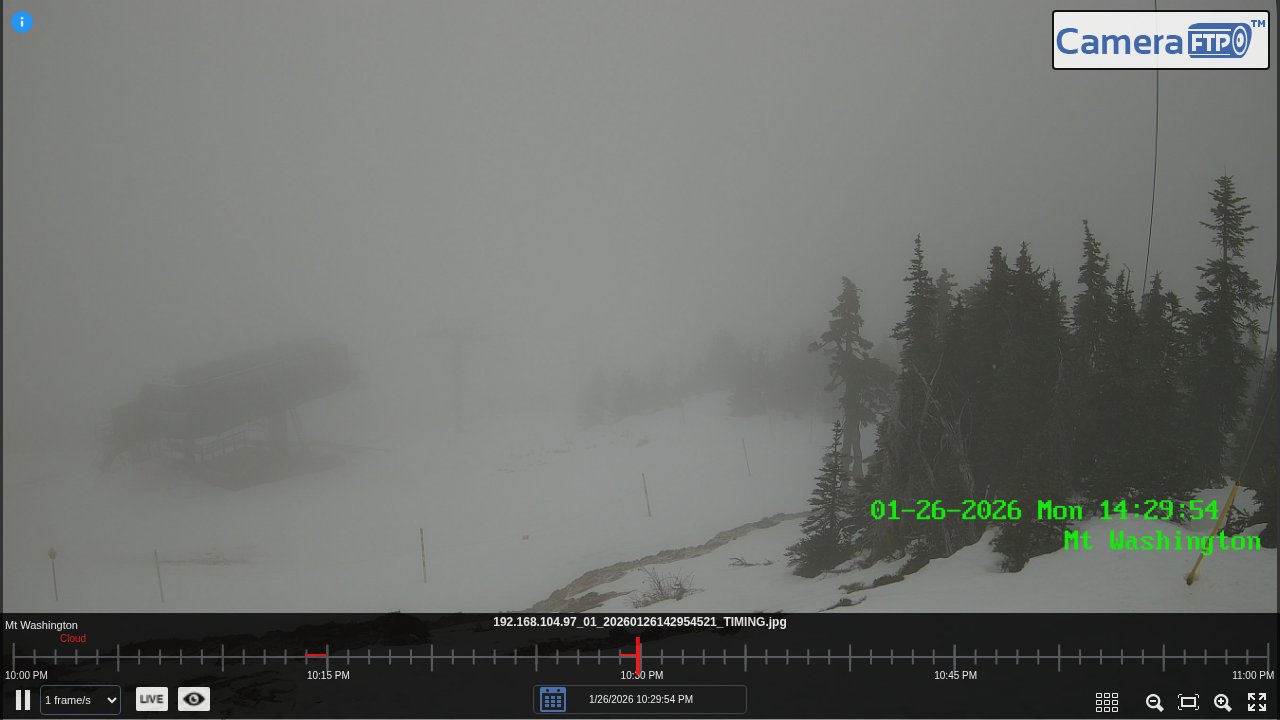

About Mt. Washington
Mt. Washington Alpine Resort is located on Vancouver Island in British Columbia, Canada, offering over 1,700 acres of skiable terrain and a vertical drop of 505 meters. The resort features a variety of runs for all abilities, a family-friendly atmosphere, and panoramic views of the Pacific Ocean and surrounding mountains. Key amenities include a modern alpine village, equipment rentals, ski and snowboard lessons, and a dedicated Nordic center for cross-country skiing and snowshoeing. Mt. Washington stands out for its abundant snowfall, diverse terrain, and unique island setting.
Read the full resort guide →Frequently asked questions about Mt. Washington
- Where is Mt. Washington?
- Mt. Washington is a ski resort in Canada.
- How high is Mt. Washington?
- Mt. Washington runs from a base elevation of 1,084 m (3,556 ft) to a summit of 1,589 m (5,213 ft), giving a vertical drop of 505 m (1,657 ft).
- How big is Mt. Washington?
- Mt. Washington has 1,700 acres (688 hectares) of skiable terrain, 81 marked runs and 9 lifts.
- Which ski pass covers Mt. Washington?
- Mt. Washington is on the Indy Pass. Access terms such as blackout dates and day limits vary by pass tier, so check the pass operator for the current season.
- When is ski season at Mt. Washington?
- Mt. Washington typically operates from December to April. Exact opening and closing dates shift each year with snowfall — check the resort's current season dates before booking.
- How much snow does Mt. Washington get in a typical season?
- Mt. Washington averages 354 inches / 899 cm of snowfall in a typical season. Any individual season can run well above or below that.
- How will El Niño affect Mt. Washington in winter 2026-27?
- El Niño Signal Rank: #364 of 488 SnowSure resorts · Tier E · strong-event signal -11% vs its own 30-yr average. In the three strongest El Niño winters on record ('97-98, '15-16, '23-24), Mt. Washington averaged -11% versus its own 30-year snowfall baseline. The honest read: this is the fleet's deepest timing play. The snow still comes — it comes later and leaner, so point your winter 2026-27 trip at the historical late-winter peak, stay flexible on dates, and watch our monthly scorecard. Analog winters: '97-98 -34%, '15-16 -46%, '23-24 +48%. One caveat that always holds: a single storm cycle can beat the climatology.


