
📷 Charlotte Pass
Oceania
Charlotte Pass
Fair · 2026 season average
Closed for the season · average of 86 verified open days
Best months to book: July, August, June · last season + 30-yr record
Scroll for happiness
Closed for the season — closed September 13
Weather data is still collected for informational purposes.
Last Snowfall
Oct 3
2d agoPast 24 Hours
0cm
Resort reportedPast 48 Hours
0cm
Past 10 Days
2cm
7-Day Forecast
0cm
Snow Depth
--
Powder Days
14
2026 season
Bluebird Days
3
2026 season
Fair
2026 season average
Charlotte Pass is closed for the season. Last season it averaged 21.2 across 86 verified open days.
Best months to book
- #1July41cm avg · scored 24.5
- #2August40cm avg · scored 22.9
- #3June28cm avg · scored 14.2
Best weeks to book
- #1 11 Jul – 17 Jul · 30
- #2 4 Jul – 10 Jul · 26.6
- #3 1 Aug – 7 Aug · 32.9
Ranked on 25% last season's SnowSure score (2026) · 75% 30-year snowfall and base-depth record. Last season's strongest fortnight was 30 Jul – 12 Aug. One season describes what happened, not what to expect. The live score returns when the lifts turn.
Current Conditions
Reported Mon, Oct 5, 05:01 PM UTC
Terrain Open
Closed for the season
Season ended September 13, 2026
25 runs · 5 lifts — live counts and the SnowSure™ Score return when the lifts turn.
Days 8–14 and every model are in SnowSure Pro.
Unlock with ProHistorical data from Open-Meteo archive • Forecast: SnowSure™ multi-model blend
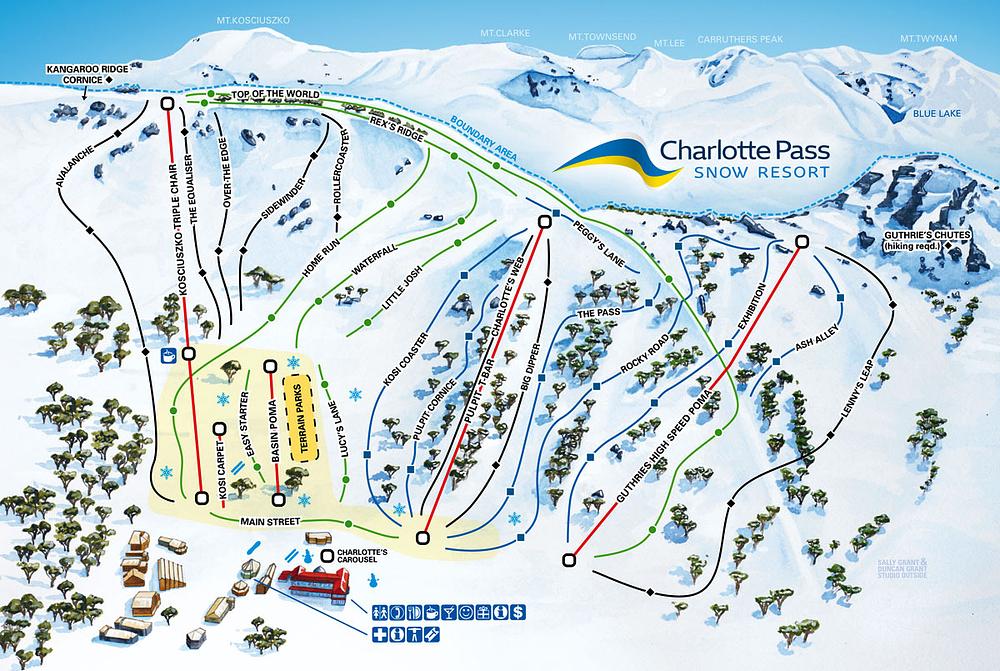
Maps
All maps for Charlotte Pass →
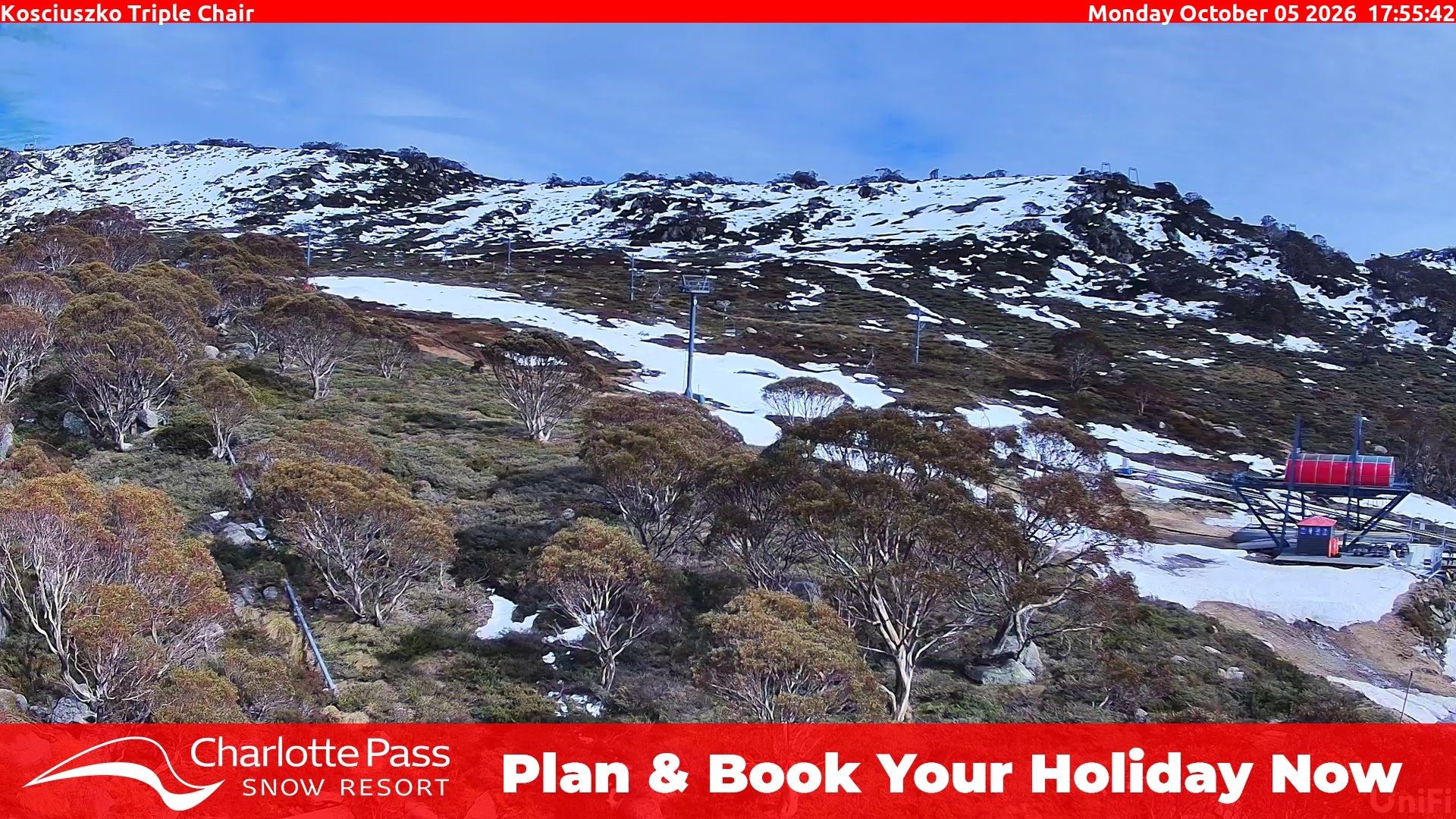
Webcams & Proof of Powder
All webcams & Proof of Powder →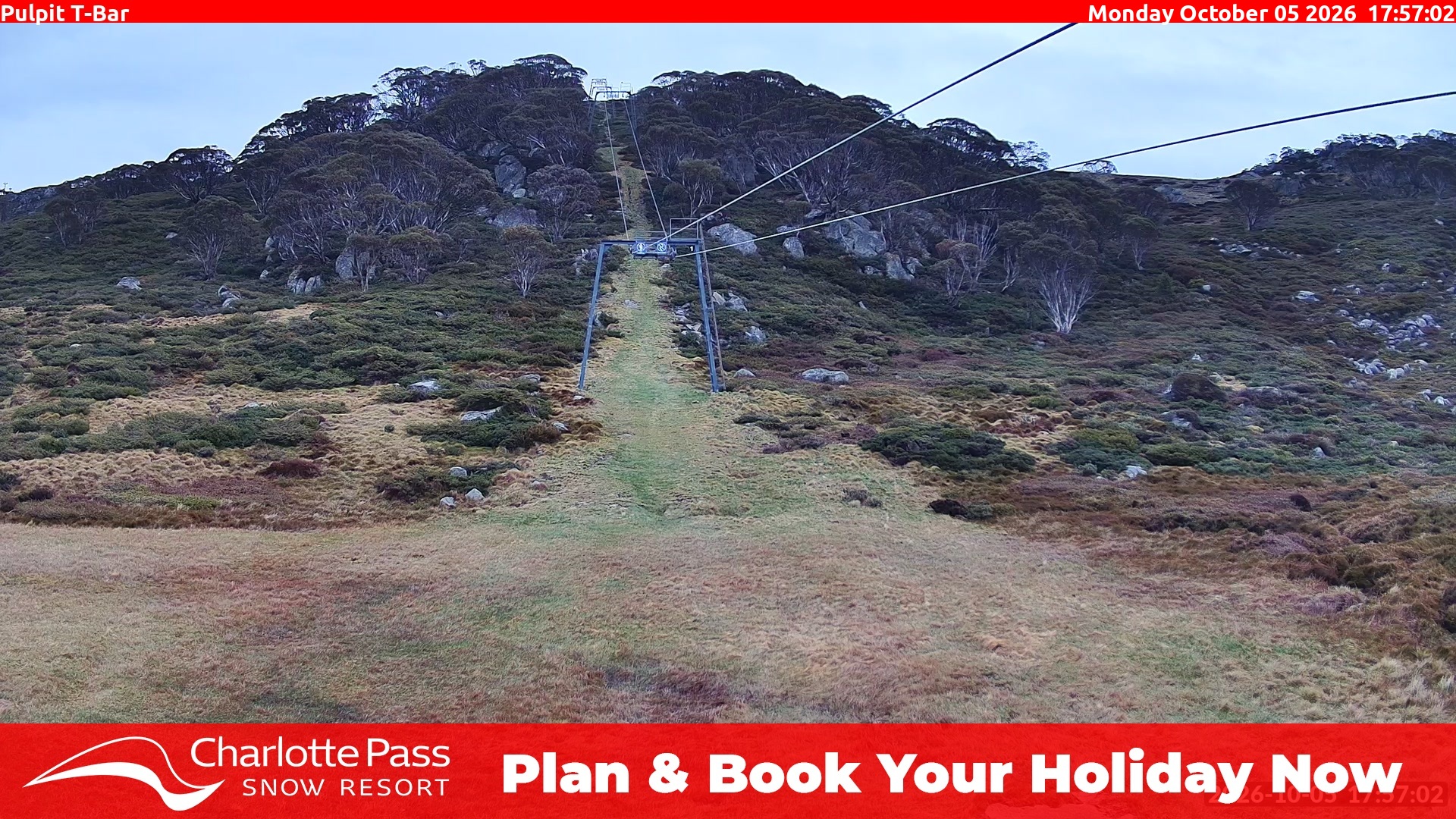

About Charlotte Pass
Charlotte Pass is a ski resort located in the Snowy Mountains of New South Wales, Australia, and is notable for being the country’s highest resort at 1,765 meters. The resort offers ski-in, ski-out access to all accommodations, a relaxed alpine village atmosphere, and terrain suitable for all abilities across 50 hectares. Signature experiences include uncrowded slopes, snow play activities, and guided backcountry tours, with amenities such as ski and snowboard rentals, lessons, and on-mountain dining. Charlotte Pass stands out for its unique snowbound access, reached exclusively by oversnow transport, ensuring a secluded and tranquil winter experience.
Read the full resort guide →Frequently asked questions about Charlotte Pass
- Where is Charlotte Pass?
- Charlotte Pass is a ski resort in Australia.
- How high is Charlotte Pass?
- Charlotte Pass runs from a base elevation of 1,755 m (5,758 ft) to a summit of 1,964 m (6,444 ft), giving a vertical drop of 209 m (686 ft).
- How big is Charlotte Pass?
- Charlotte Pass has 733 acres (297 hectares) of skiable terrain, 25 marked runs and 5 lifts.
- Which ski pass covers Charlotte Pass?
- Charlotte Pass is on the No ski pass found. Access terms such as blackout dates and day limits vary by pass tier, so check the pass operator for the current season.
- When is ski season at Charlotte Pass?
- Charlotte Pass typically operates from June to September. Exact opening and closing dates shift each year with snowfall — check the resort's current season dates before booking.
- How much snow does Charlotte Pass get in a typical season?
- Charlotte Pass averages 111 inches / 282 cm of snowfall in a typical season. Any individual season can run well above or below that.
- How will El Niño affect Charlotte Pass in winter 2026?
- El Niño Signal Rank: #485 of 488 SnowSure resorts · Tier E · strong-event signal -35% vs its own 30-yr average. In the three strongest El Niño winters on record ('97-98, '15-16, '23-24), Charlotte Pass averaged -35% versus its own 30-year snowfall baseline. Historically this is a timing play rather than a reason to stay home: aim for late winter (February–March) in winter 2026. Analog winters: '97-98 -71%, '15-16 -53%, '23-24 +18%. A pattern, not a promise.


