
📷 Mt Spokane Ski and Snowboard Park
North America
Mt Spokane Ski and Snowboard Park
Off-season
Closed for the season · reopens Dec 5
Best months to book: January, December, February · 30-yr snow record
Scroll for happiness
Off-season
Weather data is still collected for informational purposes.
Last Snowfall
--
Past 24 Hours
0cm
Past 48 Hours
0cm
Past 10 Days
0cm
7-Day Forecast
1cm
Snow Depth
--
Mt Spokane Ski and Snowboard Park is closed for the season. Here is when it is usually best to book.
Best months to book
- #1January44cm avg
- #2December49cm avg
- #3February29cm avg
Ranked on 30-year snowfall and base-depth record. The live score returns when the lifts turn.
Current Conditions
Reported Mon, Oct 5, 05:03 PM UTC
Terrain Open
Off-season
Closed for the season · reopens Dec 5
53 runs · 7 lifts — live counts and the SnowSure™ Score return when the lifts turn.
Days 8–14 and every model are in SnowSure Pro.
Unlock with ProHistorical data from Open-Meteo archive • Forecast: SnowSure™ multi-model blend
Maps
All maps for Mt Spokane Ski and Snowboard Park →
Webcams & Proof of Powder
Live cams, snow stakes, and verified storm footageAll webcams & Proof of Powder →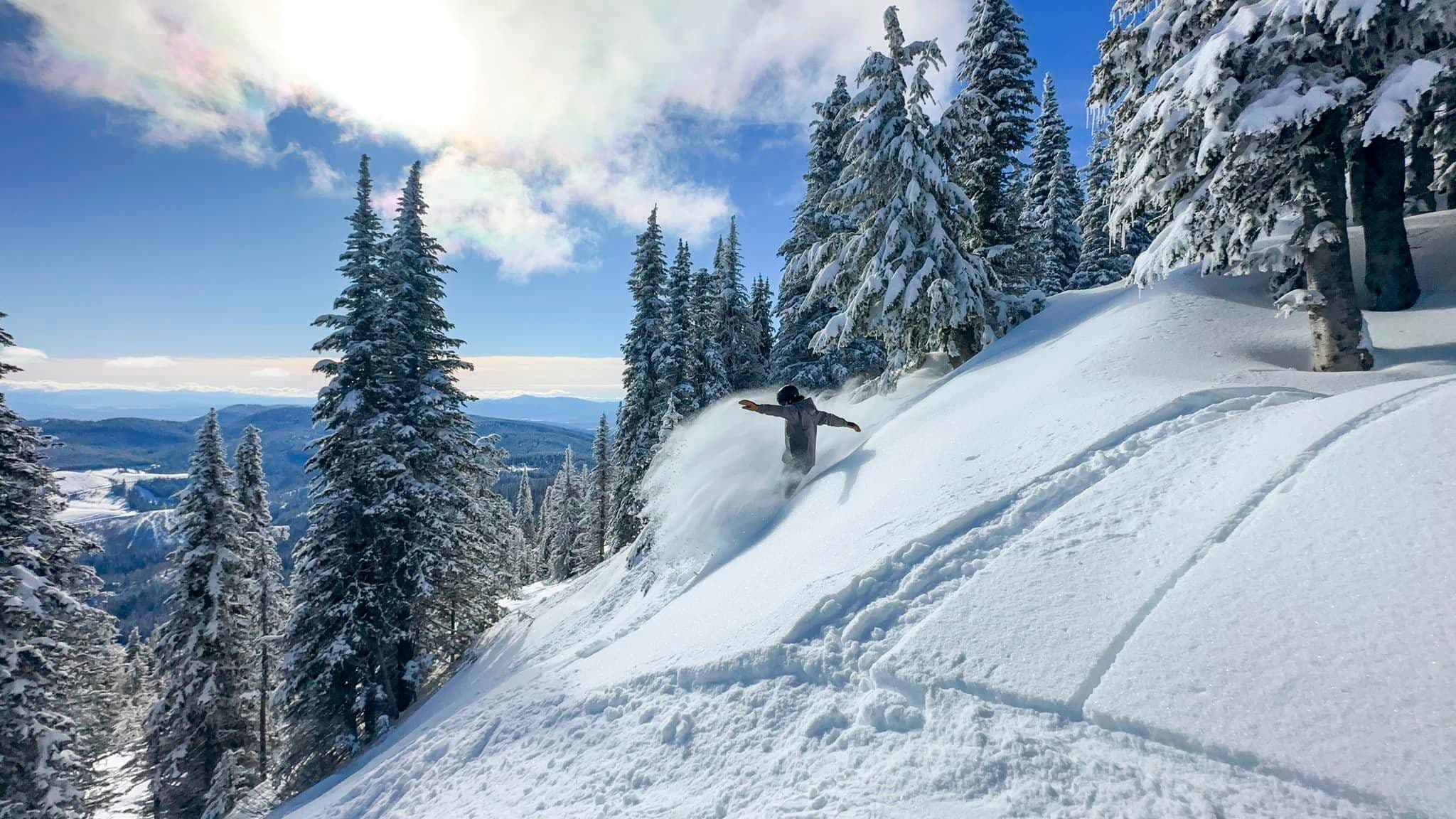
About Mt Spokane Ski and Snowboard Park
Mt Spokane Ski and Snowboard Park is located in the Selkirk Mountains near Spokane, Washington, offering over 1,700 acres of skiable terrain across six chairlifts. The resort features a mix of beginner, intermediate, and advanced runs, as well as terrain parks and night skiing. Known for its welcoming atmosphere and panoramic views, Mt Spokane provides a family-friendly environment with amenities including a historic lodge, equipment rentals, and ski school programs. Its proximity to Spokane and diverse terrain make it a popular choice for both locals and visitors seeking accessible and varied winter recreation.
Read the full resort guide →Frequently asked questions about Mt Spokane Ski and Snowboard Park
- Where is Mt Spokane Ski and Snowboard Park?
- Mt Spokane Ski and Snowboard Park is a ski resort in the United States.
- How high is Mt Spokane Ski and Snowboard Park?
- Mt Spokane Ski and Snowboard Park runs from a base elevation of 1,164 m (3,819 ft) to a summit of 1,795 m (5,889 ft), giving a vertical drop of 631 m (2,070 ft).
- How big is Mt Spokane Ski and Snowboard Park?
- Mt Spokane Ski and Snowboard Park has 1,600 acres (647 hectares) of skiable terrain, 53 marked runs and 7 lifts.
- Which ski pass covers Mt Spokane Ski and Snowboard Park?
- Mt Spokane Ski and Snowboard Park is on the Freedom Pass. Access terms such as blackout dates and day limits vary by pass tier, so check the pass operator for the current season.
- How much snow does Mt Spokane Ski and Snowboard Park get in a typical season?
- Mt Spokane Ski and Snowboard Park averages 137 inches / 348 cm of snowfall in a typical season. Any individual season can run well above or below that.
- How will El Niño affect Mt Spokane Ski and Snowboard Park in winter 2026-27?
- El Niño Signal Rank: #387 of 488 SnowSure resorts · Tier E · strong-event signal -12% vs its own 30-yr average. In the three strongest El Niño winters on record ('97-98, '15-16, '23-24), Mt Spokane Ski and Snowboard Park averaged -12% versus its own 30-year snowfall baseline. Historically this is a timing play rather than a reason to stay home: aim for late winter (February–March) in winter 2026-27. Analog winters: '97-98 -24%, '15-16 -29%, '23-24 +17%. A pattern, not a promise.


